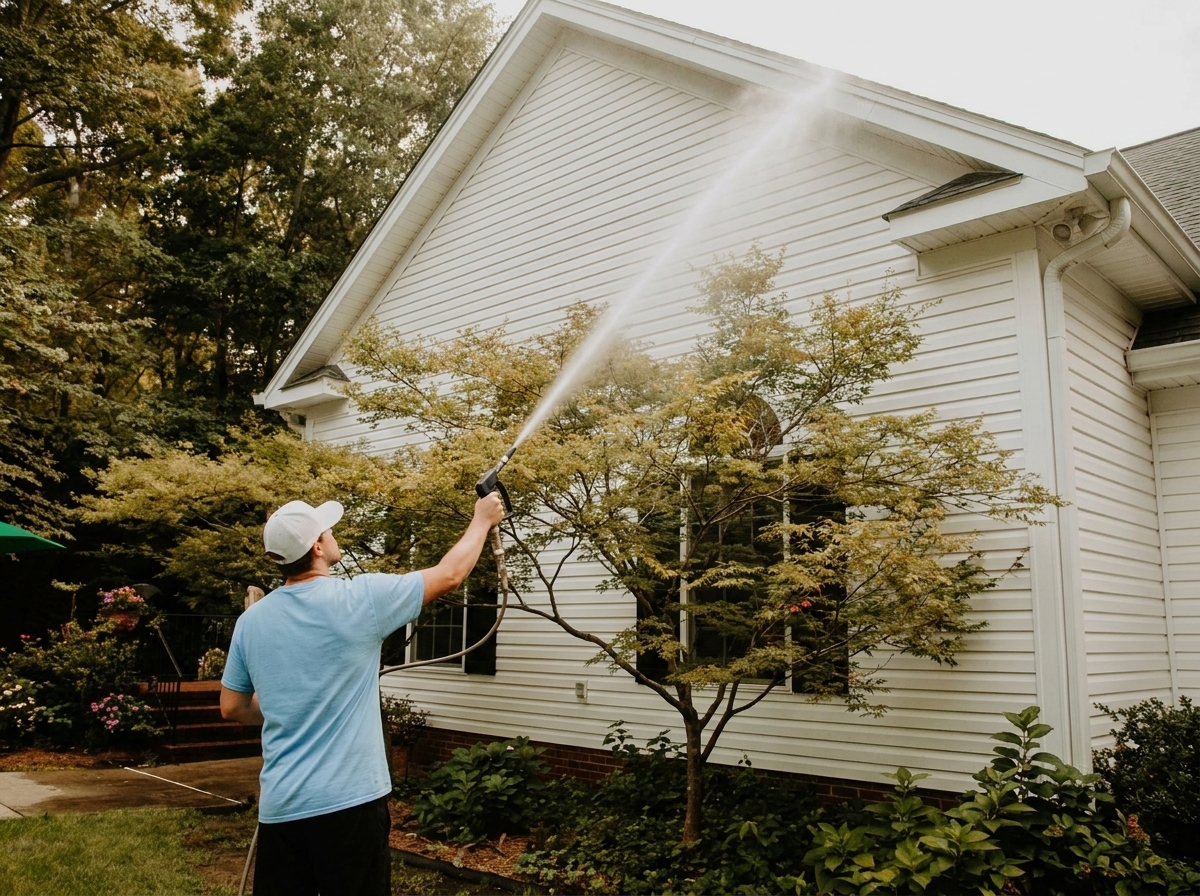
House washing
Low-pressure soft wash for painted siding, render, stucco and board-and-batten. Kills the organic growth rather than pushing it around.
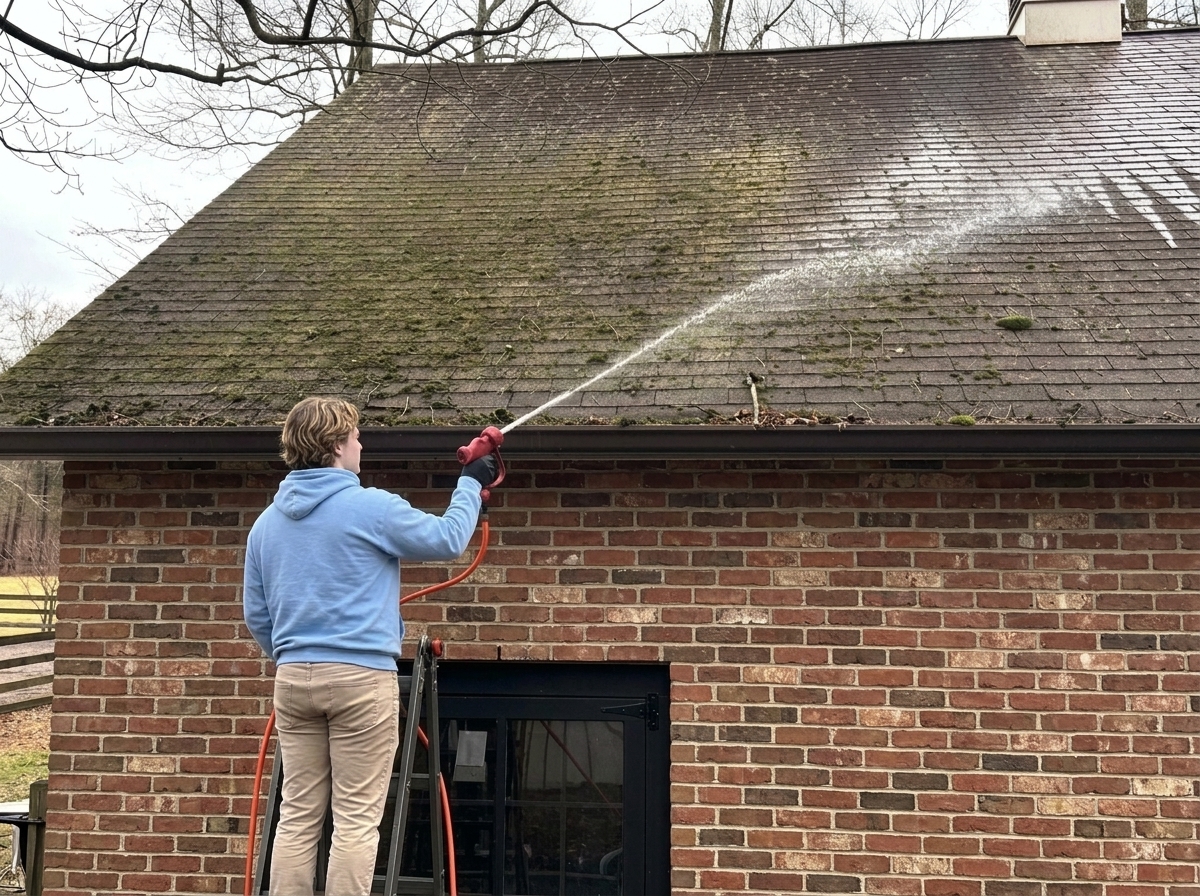
Roof Cleaning
Marchmont is an exterior conservation studio. We survey the material first — soft-fired brick, lime mortar, cedar, slate, leaded glass — then choose the gentlest method that will actually work. Pressure is a last resort, not an opening bid.
The prescription index
A roof and a driveway are not the same job at a different height. Choose a material to see what we actually do to it — and what we refuse to do to it.
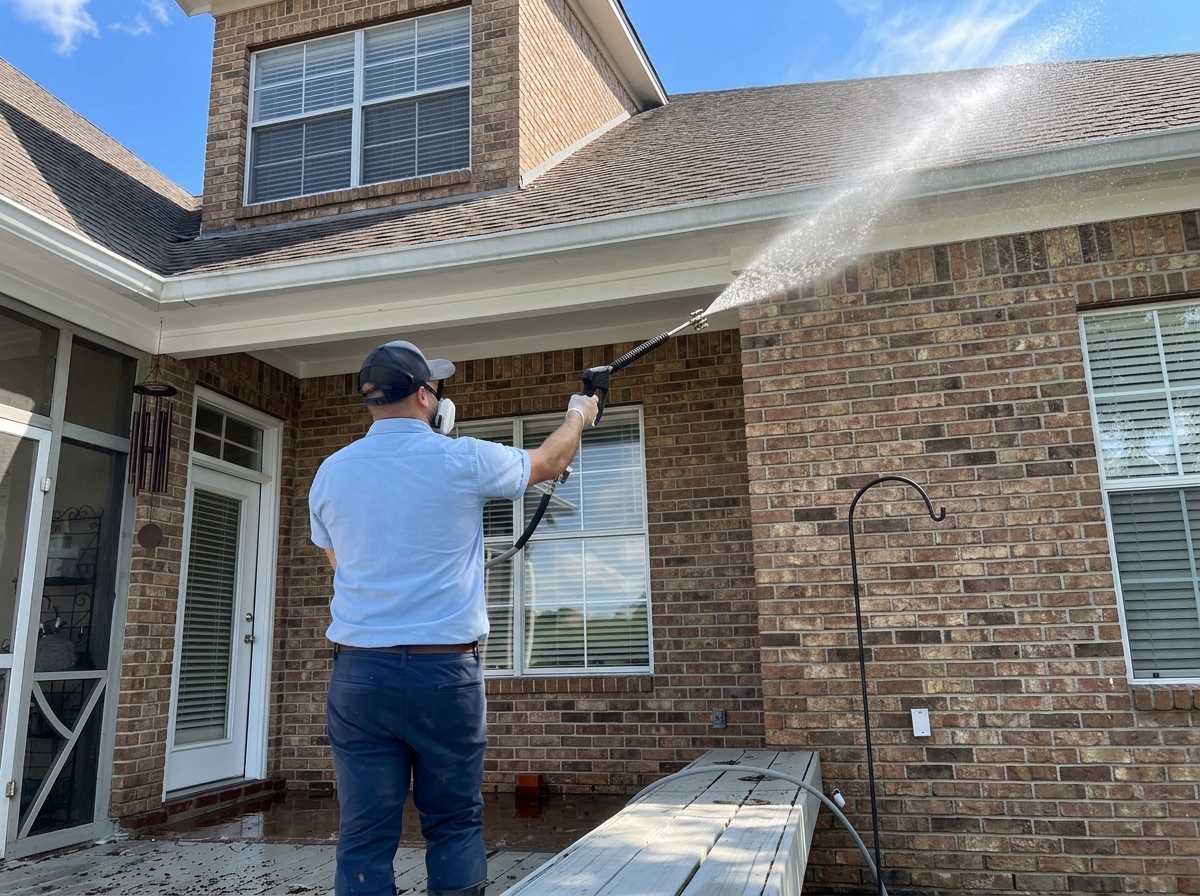
Victorian brick is softer than the mortar joints around it. Wash it like concrete and you strip the fire skin — the hard outer face — and the brick starts drinking water it can't shed.
We won't Run a turbo nozzle or anything above 600 PSI on brick this age, or touch a joint that's already spalling — that's a repointing job, and we'll say so.
How a job runs
The sequence matters. Most of the damage we're called in to correct came from skipping straight to step three.
We walk the property, test mortar with a thumbnail, check glazing putty and paint adhesion, and note anything that needs a trade we're not. Takes about 40 minutes.
Every elevation listed with its method, solution strength and dwell time. If a surface should be left alone, that's written down too, with the reason.
Beds soaked and sheeted before a drop of solution is mixed. Same crew start to finish. We work top-down so nothing gets cleaned twice.
We walk it with you in daylight, not at dusk. Anything you're not happy with is re-done before we load the van.
What we take on
Low-pressure soft wash for painted siding, render, stucco and board-and-batten. Kills the organic growth rather than pushing it around.
Gloeocapsa magma is a living organism, not a stain. We treat it chemically at zero pressure and let the weather rinse the residue over the following weeks.
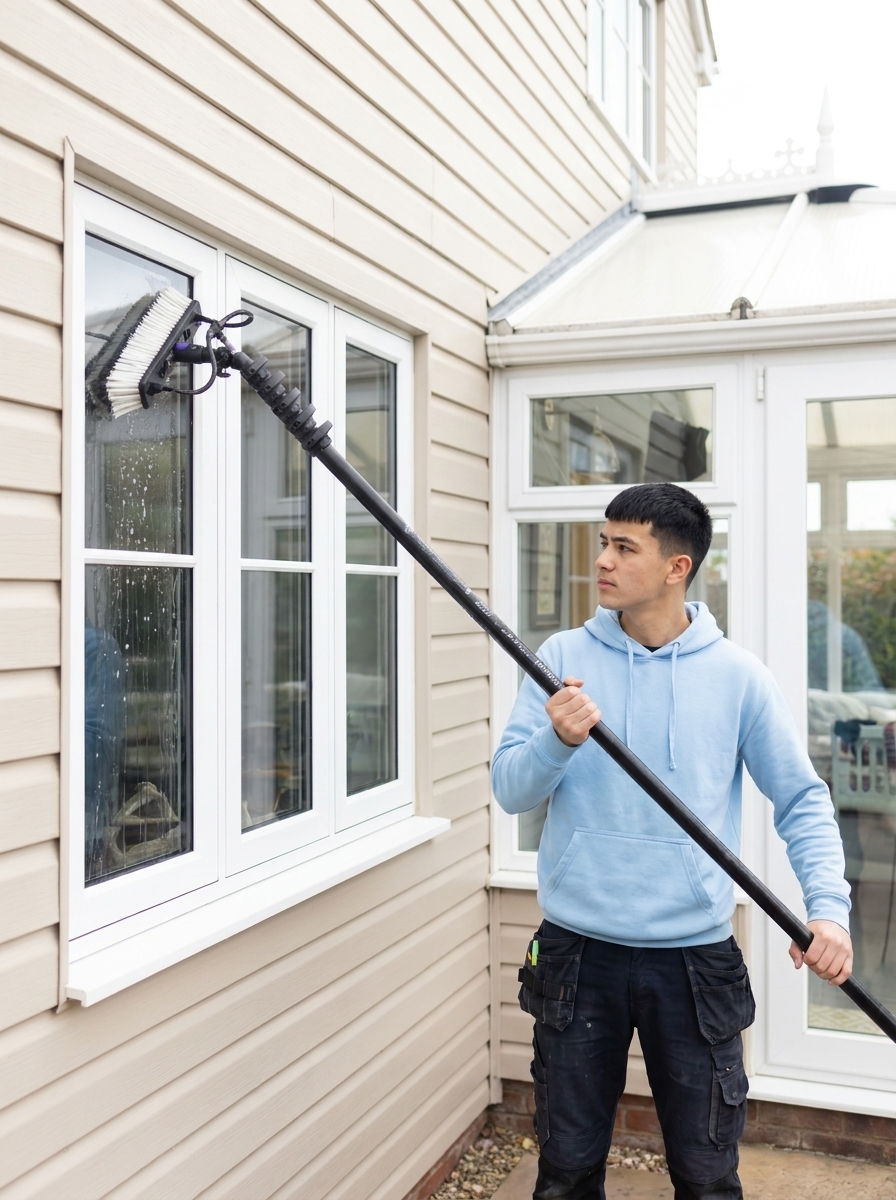
Pure water, no detergent, no ladders against the gutter line. Traditional squeegee work indoors and on leaded panes where the pole can't read the surface.
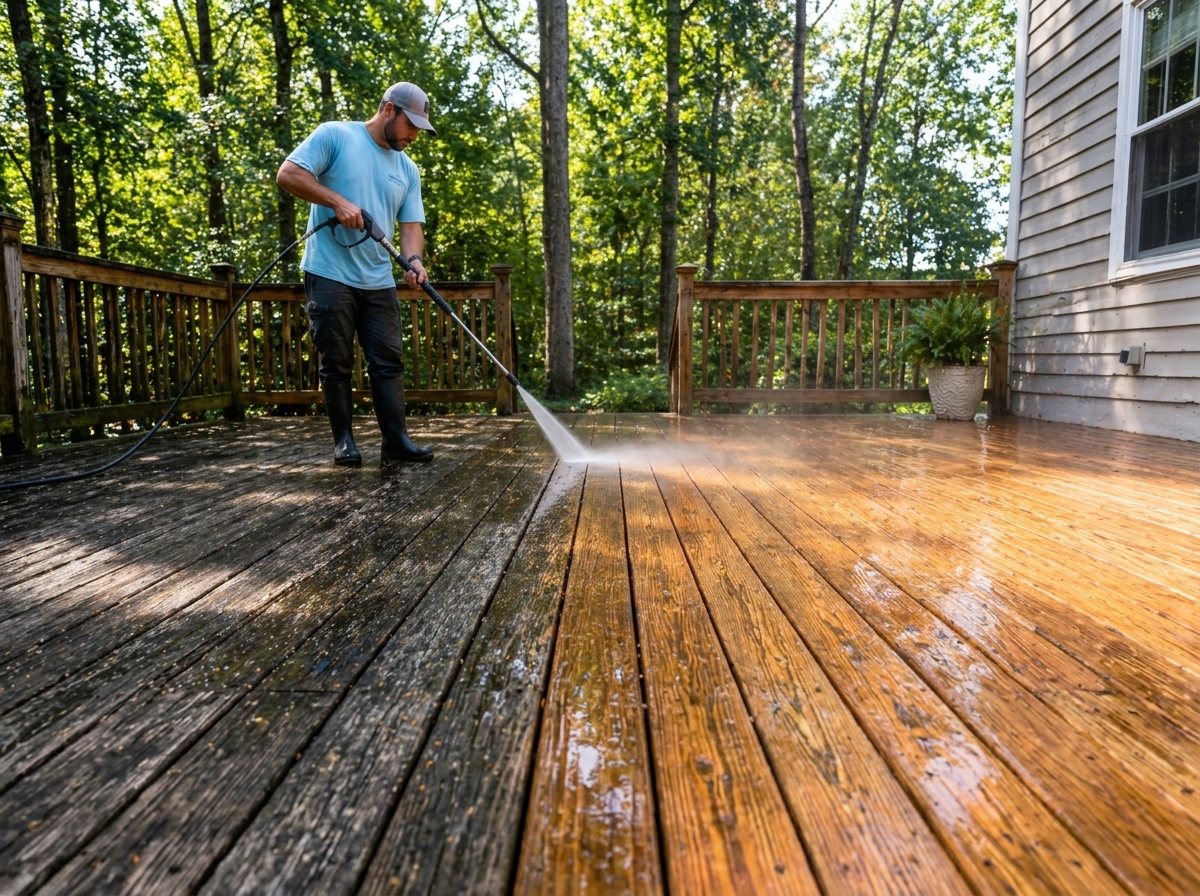
Percarbonate lift, neutralising rinse, then a moisture reading before anyone talks about sealing. Sealing a wet deck is how you trap the problem inside it.
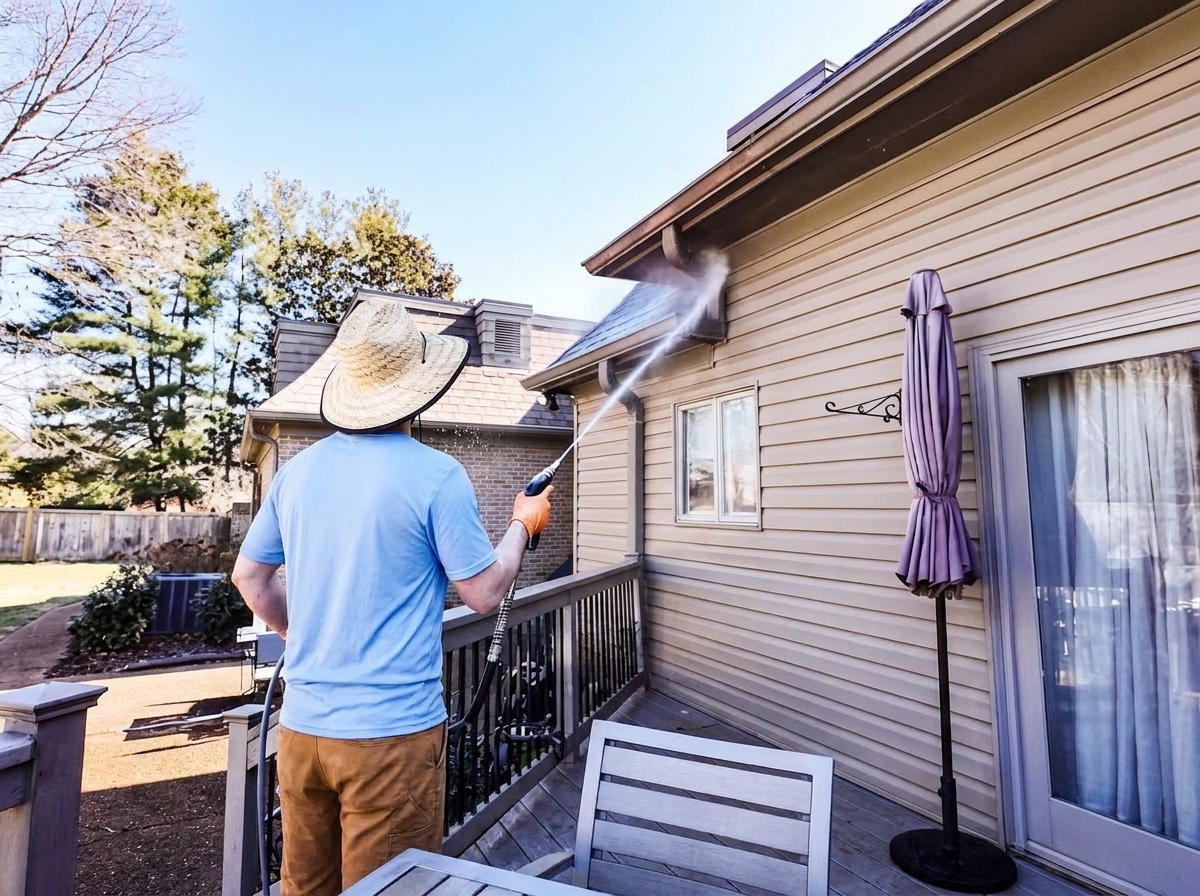
Interiors cleared by hand and bagged — not blown into the borders. Downpipes flow-tested before we call it done.
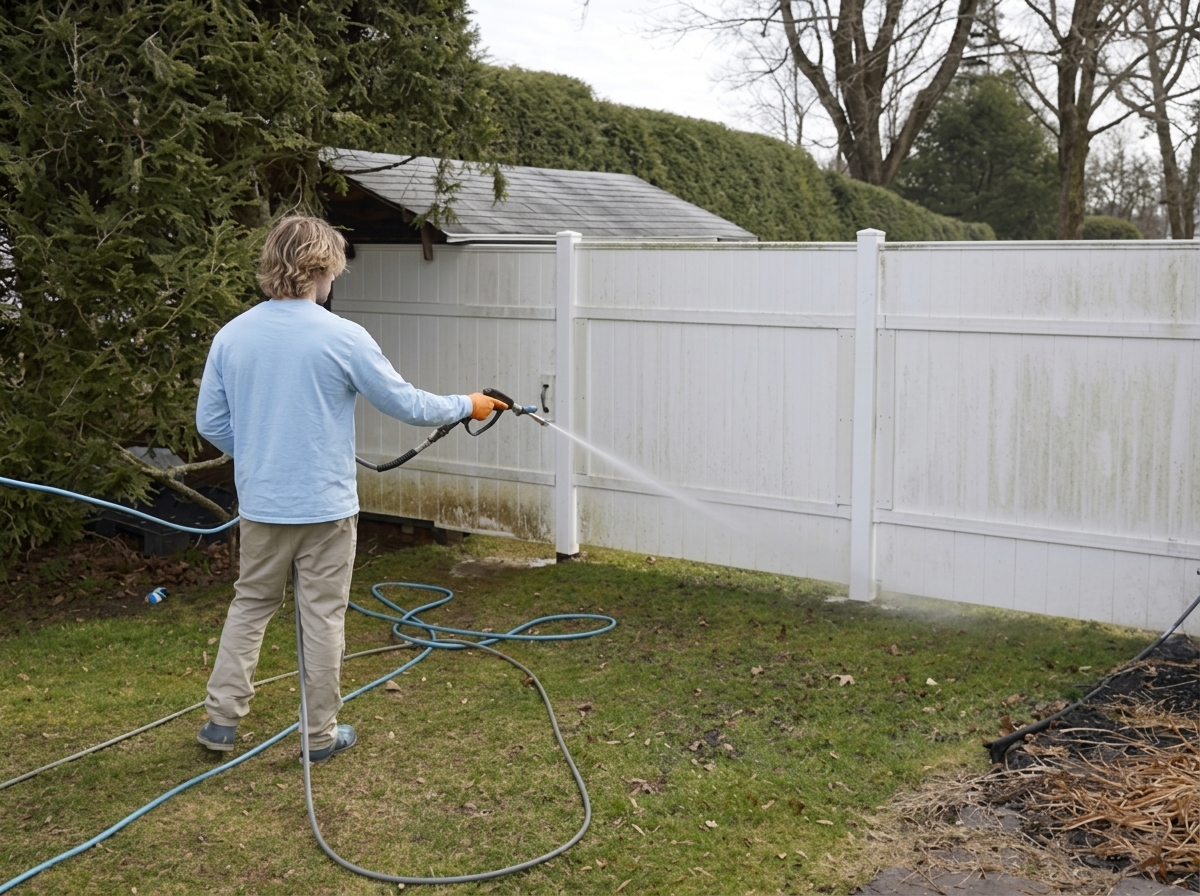
Vinyl, painted timber and estate railings. Included at a reduced rate whenever it runs alongside a house wash.
Reviews
The compliment we get most often isn't about how clean it looks. It's that we talked them out of something.
★★★★★
“They spent longer surveying than the last firm spent washing. Then they told us the north gable didn't need doing yet and took it off the price.”
★★★★★
“The mortar was repointed badly in the eighties and I was braced for an argument about it. They photographed it, explained it, worked around it, and left the joints alone.”
★★★★★
“Second year on the care plan. They arrive when they say, they put the pots back where they found them, and nothing has leaned a ladder on my gutters since.”
Placeholder reviews — replace all three with your own before publishing.
The record
Every property gets a file: elevations, materials, methods, solution strengths, dates. When we come back in eighteen months we're not guessing, and neither are you if you sell the house.
Placeholder figures — swap these for your own before publishing.
Service area
We keep the radius tight on purpose. A care plan only works if we can be at your gate the week the north elevation starts turning, not the month after.
Placeholder towns — swap in your own before publishing.
Questions
Pressure washing, as most people mean it, is not. That's why most of what we do isn't pressure washing — it's chemistry at low pressure, and on a roof it's no pressure at all. The survey exists to work out which surfaces can take pressure and which can't, before anything is switched on.
Sodium hypochlorite, yes — diluted to between 0.75% and 2% depending on the surface, with a surfactant so it clings long enough to work. It's the only thing that reliably kills algae and lichen rather than shifting it. What we don't do is use it on rust, where it sets the stain permanently.
We do, regularly. Cleaning generally doesn't need consent, but altering the surface can — and the line between the two is exactly where a careless wash gets a homeowner in trouble. If there's any doubt we'll put the method in writing for your conservation officer before we start.
Spring through autumn for anything involving dwell time — solutions work slowly below about 5°C, and we won't rush them with pressure to compensate. Glass and gutters we do year-round. If you want the house right for an occasion, book the survey a season ahead.
A typical two-storey property is one day, occasionally two if the elevations are complicated or the beds need a lot of protecting. The survey gives you the number before you commit, and it's the number we hold to.
Forty minutes, no charge, no obligation. You'll get a written scope either way — even if the answer is “leave it another year.”
Request a survey